
AI for Sales Leaders
A working executive session. Your leaders leave using AI to decide sharper, coach better, and prepare faster, on the tools your organization has already deployed.
Your tools are deployed. Your leaders are not yet fluent.
Deploying enterprise AI is an infrastructure milestone. It puts the capability in place. It does not, on its own, change how an experienced leader decides, coaches, or prepares.
Most leaders who have the tools use them for drafting and cleanup. The leaders who use them for judgment, running a decision through three scenarios before they commit, stress-testing a territory plan, preparing a coaching conversation with the representative's real numbers in front of them, operate at a different level than the ones who do not. For a commercial organization, that gap is where an advantage compounds or is handed away. This session closes it.
"I see so many times companies struggling to put this together at an enterprise level, and that's where Megan comes in."

Six executive disciplines. Each one leaves as a method your leaders own.
The curriculum is standing; the material is yours. Every segment runs on live situations from your leaders' desks, not sample cases, and each leader leaves with an artifact they produced in the room.
- Campaign and brand decisions: pressure-test positioning and creative direction before the spend commits.
- Pipeline narrative and forecast interrogation: find the soft assumptions before the CFO does.
- Pricing and portfolio calls: model the scenarios that a gut call skips.
- Agency and vendor review: sharper briefs in, sharper accountability back.
Scoped to your leadership calendar, not the other way around.
This is not a lecture on AI or a tour of features your leaders can already see. Every format is a working session: leaders bring live decisions, plans, and coaching situations, and work them in the room.
Success is observable within one week. Your leaders apply the methods to their own work rather than recall the session as a demonstration.
Experienced commercial leaders whose organization has already deployed AI.
- Sales vice presidents and directors who set strategy and coach the next layer of leaders.
- Marketing and commercial officers accountable for campaign, brand, and portfolio decisions.
- Sales managers responsible for representative performance and development.
- Leadership teams that have licensed AI at scale and want a leadership return on it, not a broader rollout.
- Organizations that have completed deployment and governance and are ready for the fluency layer.
Executive coaching by a practitioner, not a tool tour by an enthusiast.
- Author, The Intelligence Organization (RBD. Press): two years of primary research across four industries on how organizations turn AI capability into leadership advantage.
- Executive coach and workshop leader. Ms. Starkey runs working sessions and roundtables for senior executives, including leaders at Fortune 500 organizations, and coaches executives one to one.
- Guest lecturer, University of St. Thomas, teaching AI in marketing to graduate and undergraduate marketing classes.
- Marketing operator by background. Led future-of-marketing work at General Mills across brands including Pillsbury and the Tablespoon platform. She has sat in the seats her participants hold.
- Fluent in executive politics. The session teaches AI inside the reality of budget cycles, board dynamics, and stakeholder positioning, because the instructor has operated inside them.
- A daily practitioner at the frontier. Ms. Starkey builds her own research, coaching, and operations systems in Claude Code every day. She teaches from working systems, not slideware.
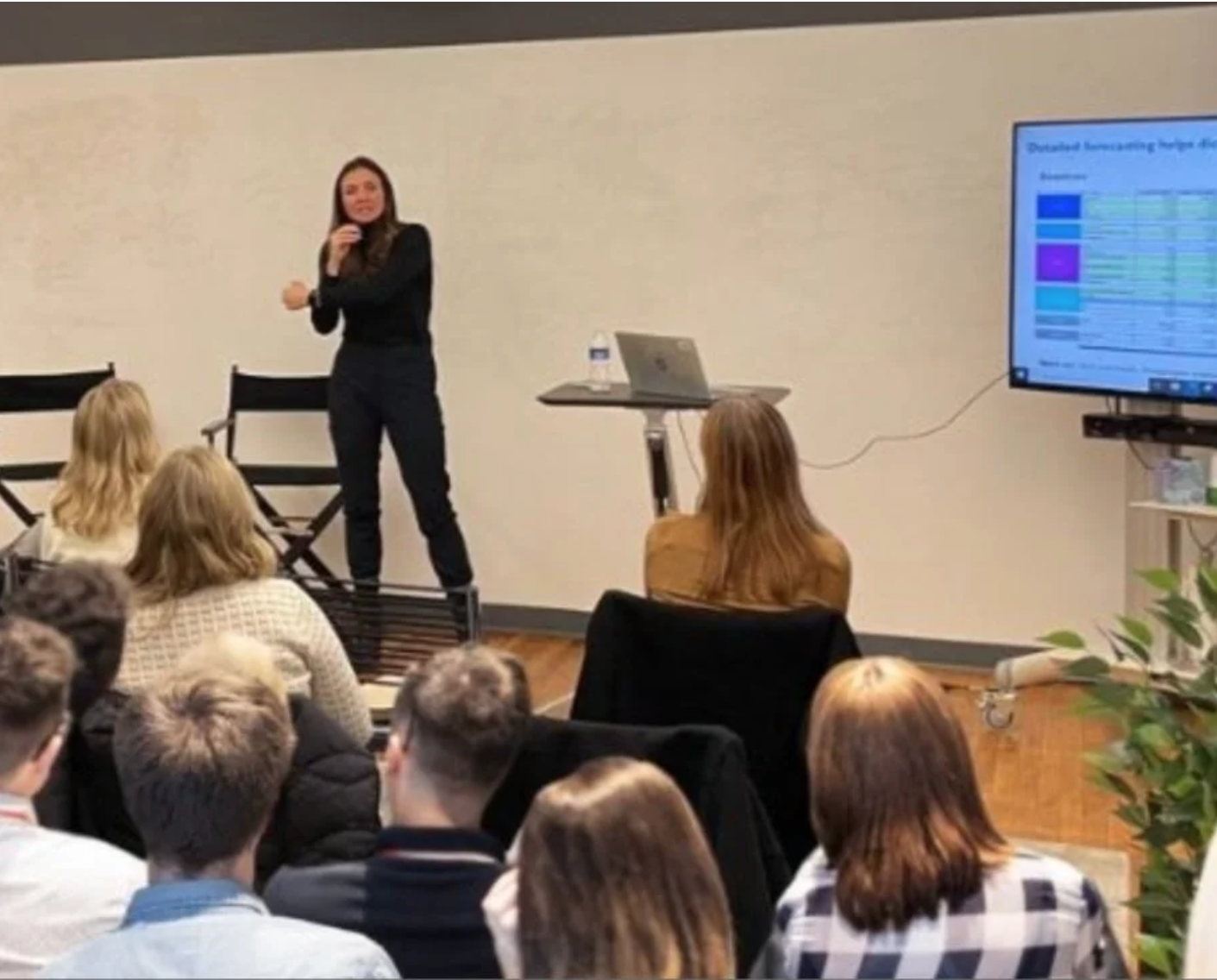
"The rare speaker who makes you rethink the problem, not just the solution."
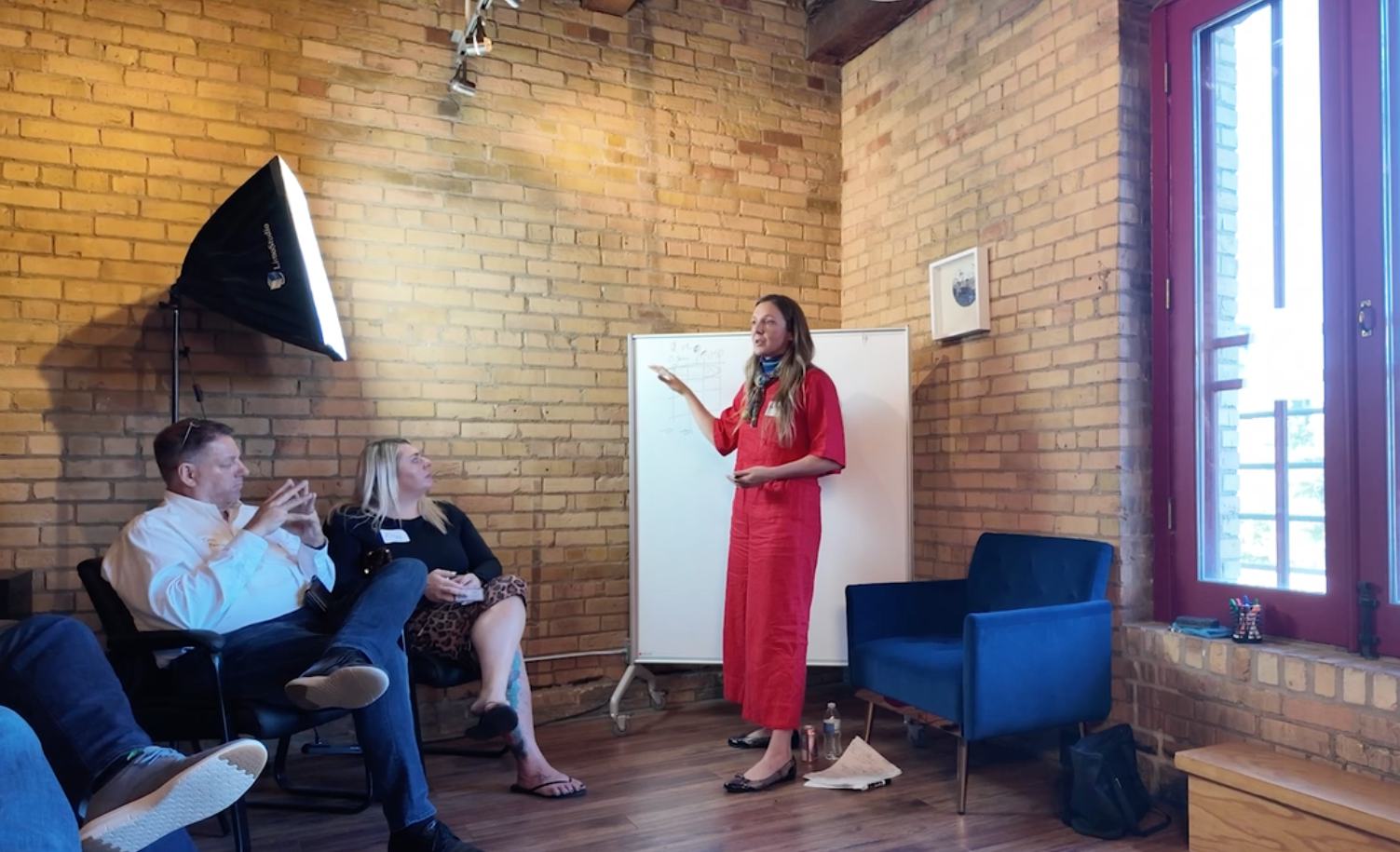
Megan C. Starkey.
Founder of RBD. and author of The Intelligence Organization, the study of the shift from AI as a tool an organization owns to a capability its leaders actually use to think and lead. She brings that work into the executive room, in your leaders' language, on your leaders' problems.
The questions leadership teams ask first.
Who is this workshop for?
Sales vice presidents and directors, marketing and commercial officers, and sales managers at organizations that have already deployed AI. It assumes the tools are in place and the governance question is settled. The people in the room are experienced leaders, not new managers learning to lead.
How long is a session?
The executive working session runs two to three hours with a leadership team. The half-day intensive adds extended practice on each discipline and a plan for keeping the methods in use week to week. The offsite module is scoped to fit an existing leadership offsite or QBR agenda.
Does it require a particular AI platform?
No. The session runs on whatever your organization has already deployed. There is nothing to buy, install, or pilot in order to use what your leaders take away.
What do leaders leave with?
Two to three methods already in use the following week, and an artifact each leader produced during the session from their own live work. That is a decision pressure-tested against a real call, a plan segment tested and revised, or a coaching plan prepared for one of their people.
Is this a training course or a working session?
A working session. Leaders bring live decisions, plans, and coaching situations and work them in the room. There is no lecture on how AI works and no tour of features your leaders can already see.
How is it priced?
The working session is $5,000, and leaders leave with two to three methods already in use the following week. You confirm team size, format, and scheduling on a scoping call before committing to anything.
Is there a self-serve version?
Yes. The Sales Leader Prompt Library packages the session’s prompt systems at $97, for a leader who wants to run them alone. The session is the live version, worked with your team in the room.
How quickly does it show up in the work?
Within one week. The measure is whether leaders apply the methods to their own work, not whether they recall the session.
Bring this session to your leadership team.
A twenty-minute call covers how it runs and how it fits your leaders' calendar.