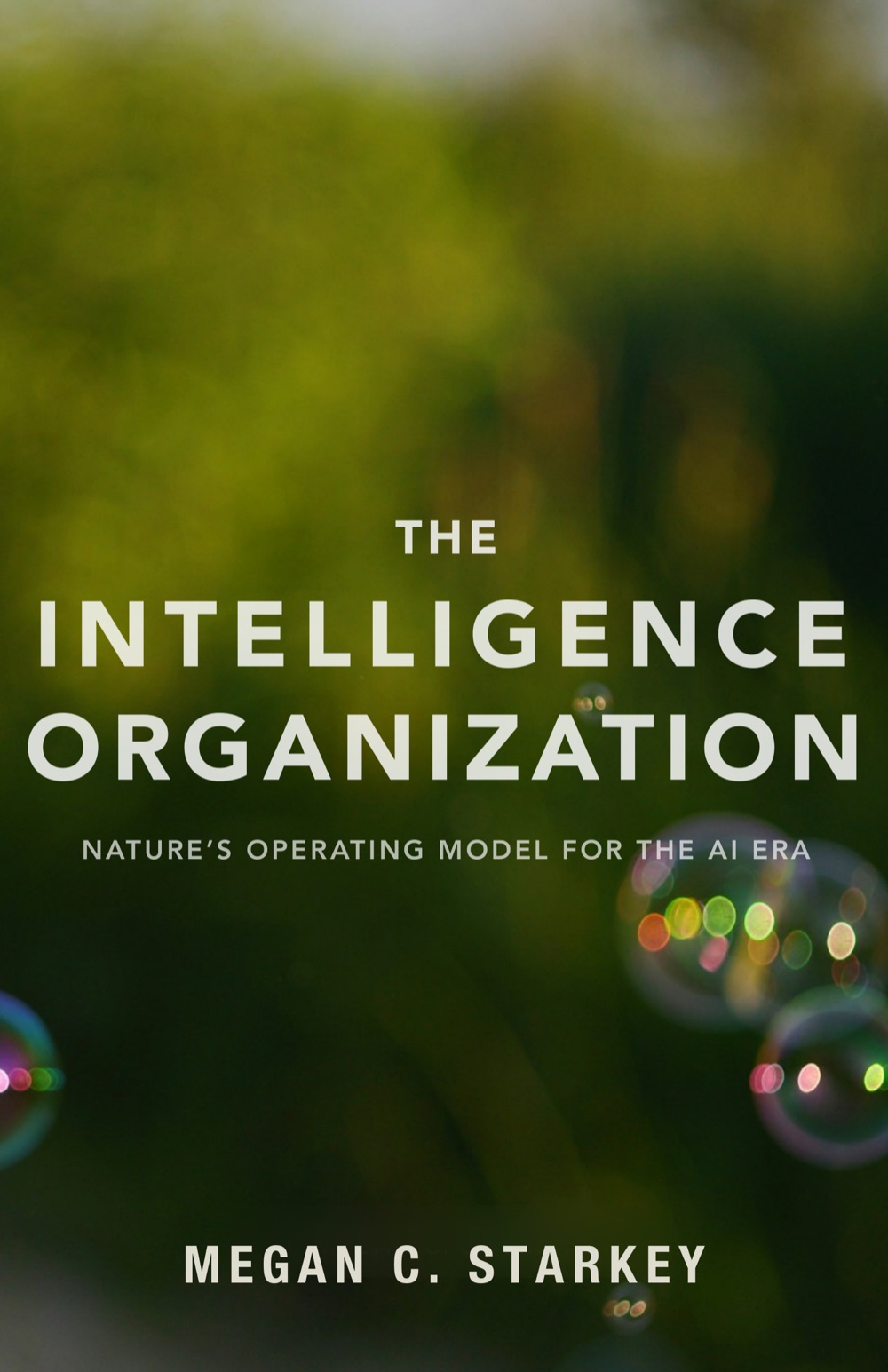
The Intelligence Organization
What is The Intelligence Organization about?
We spent a century building organizations to run like assembly lines. Then we introduced a technology that behaves like a nervous system. Only one of them can win, and today the machine is winning.
In The Intelligence Organization, enterprise AI strategist Megan C. Starkey shows why the modern corporation cannot absorb a technology that joins every department it touches. Its blueprint was carried out of World War II and into Ford in 1946. AI is integrative. The org chart is divisional. Nearly every enterprise AI failure traces to that incompatibility. Starkey argues the fix is a redesign, and that nature already drew the plans. Living systems have run distributed intelligence for 3.8 billion years, on cooperation, feedback, shared intelligence, and distributed power, the exact principles the corporate machine was built to suppress.
Grounded in original research and two decades at the intersection of business and technology, Starkey delivers both the diagnosis and the evolution. She first exposes how the corporate machine was built and why conventional AI transformation isn't working. Then, she constructs the replacement across four bands: aligning technology capacity, talent, operations, and a governance model that lets the organization move as fast as the technology demands.
Underneath the business case sits a larger project: bringing human work back into balance. Equal parts execution manual and future-of-work manifesto, The Intelligence Organization is written for the leaders who must create economic value from AI inside a real company, the consultants who guide them, and everyone who has felt the everyday incompetence of the corporate machine.
What is inside the book?
Quotable passages
Verbatim from the book. Attribute to Megan C. Starkey, The Intelligence Organization (RBD. Press, 2026).
The machine fails this way with every integrative technology it meets, and AI is the most integrative technology it has ever met.Chapter 1
No one person was responsible for the disaster. Everyone did their job, and yet — disaster.Chapter 2
Better frontier model performance does not lower the need for human governance. It raises it.Chapter 2
We would be trusting the thing we fear to police itself.Chapter 2
Because we are trying to govern what looks increasingly like a network with hierarchy. It doesn’t work. And working harder inside the old machine only creates friction.Chapter 2
Suggested interview questions
- You say the modern corporation was designed in 1946. What was carried out of the war and into Ford, and why does it still run most large companies?
- What does it mean that AI is integrative and the org chart is divisional? Where does that show up first inside a company?
- Most enterprise AI failures get blamed on data, talent, or tools. What is the failure you see that those explanations miss?
- What did the Nike and Epic cases teach you about trust in a working system?
- Why do you say better AI models raise the need for human governance rather than lower it?
- What can a 3.8-billion-year-old design tell a CIO about how to organize for AI?
- Walk through the four bands. Which one do companies skip, and what does it cost them?
- Your Star Tribune column argued that companies are not cutting jobs because of AI; they have stopped hiring at the entry level. How does that connect to the book?
- What should a CEO writing a 2027 budget do differently after reading this?
- You run your own firm on this operating model. What does that look like day to day?
Topics Megan C. Starkey speaks on
- Why the 1946 corporate blueprint cannot absorb AI, and what replaces it
- AI governance as organizational design: governing a network with a hierarchy
- Deciding what to build: prioritizing AI investment by return with the Starkey Model
- AI and the workforce: the entry-level hiring shift no headcount report shows
- Nature’s operating model: what living systems teach about distributed intelligence
Booking: rbdco.ai/speaking.
Book facts
Images
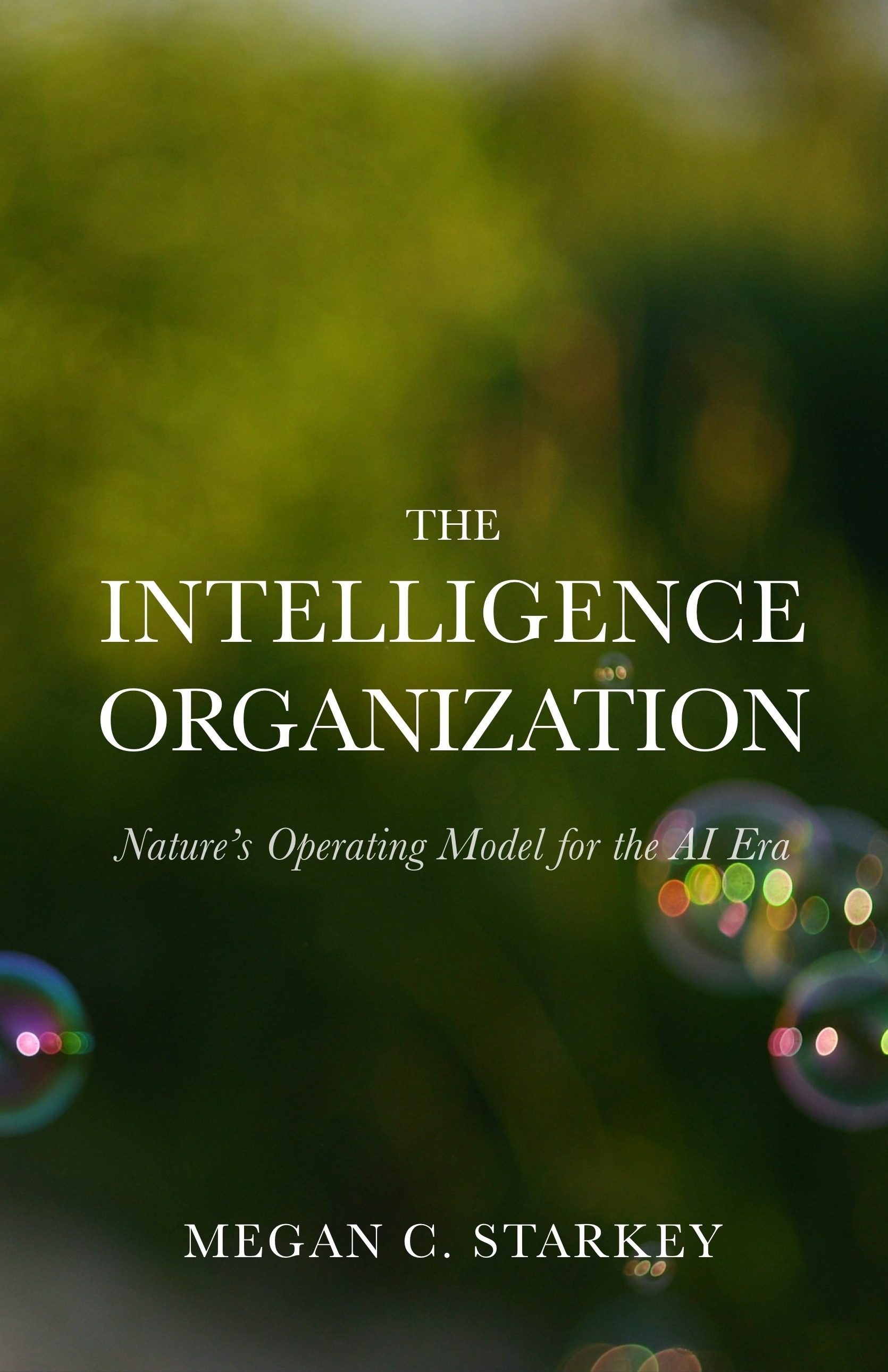
Right-click to save. Credit is not required. Please do not crop the cover.

Media contact
Interviews, excerpts, review copies, and speaking: contact@rbdco.ai
RBD Co. · Minneapolis–Saint Paul, Minnesota · rbdco.ai · LinkedIn